Review: Watercolor Christmas Tree Toys Clipart for Stitching
As a designer who spends more time staring at stitch simulations than actual holiday decorations, I approach new Illustrations with a critical eye. It is not enough for a graphic to look pretty on a screen; it must survive the translation from pixel to thread. Recently, I evaluated the Watercolor Christmas Tree Toys Clipart collection to see if it holds up under the needle for real-world embroidery project applications. My goal was simple: determine if these assets are viable for client work, boutique merchandise, or high-end personalized gifts.
The Aesthetic First Impression
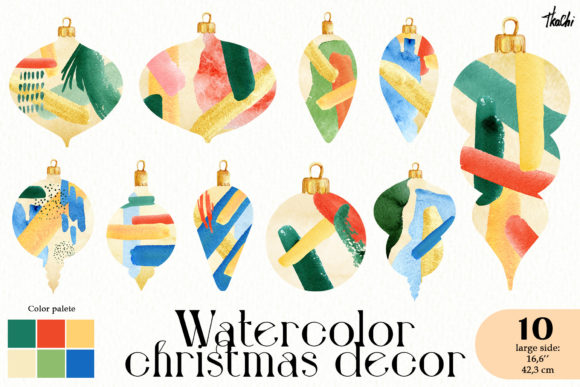
The immediate appeal of the Watercolor Christmas Tree Toys Clipart lies in its softness. Unlike the rigid, vector-sharp lines often found in standard holiday graphics, these designs carry a gentle, hand-painted mood. The shapes suggest classic ornaments—baubles, stars, and perhaps some whimsical wooden toys—but rendered with a fluidity that feels organic. For an embroidery designer, this presents both an opportunity and a challenge. The lack of hard borders means the design relies heavily on color blending and subtle transitions to define its form. When visualizing this as a machine embroidery design, the potential for a sophisticated, heirloom-quality look is significant, provided the digitizing respects the original artistic intent.
Real-World Application Scenarios
To truly test the viability of these assets, I imagined a specific scenario: a small boutique owner preparing a limited run of holiday custom apparel and home goods. Picture a high-quality linen tote bag design intended for carrying market finds during the festive season. The Watercolor Christmas Tree Toys Clipart would shine here. The softer edges of the watercolor style complement the natural texture of linen beautifully, avoiding the "stamped-on" look that dense, blocky fills can create on textured fabrics.
Another strong use case is sweatshirt embroidery. Holiday sweatshirts are a staple for Etsy seller inventories. Applying these toy motifs to the chest or sleeve of a fleece garment could create a charming, nostalgic vibe. Because watercolor aesthetics often imply a degree of transparency and layering, they work well on the slightly bulky surface of a sweatshirt without overwhelming the garment's drape. Similarly, for baby embroidery, such as a onesie or a nursery blanket, the gentle theme and non-aggressive lines make these designs perfect for delicate items where comfort and visual softness are paramount.
Navigating Technical Challenges
However, enthusiasm must be tempered with technical realism. Translating a watercolor aesthetic into an embroidery file requires careful attention to stitch density. If the digitizer attempts to replicate every subtle shade change with a different thread color, the result could be a muddy, overly dense patch that puckers the fabric. In my assessment, these designs would perform best when simplified into key color blocks using a mix of satin stitch for outlines and light fill stitch for the body of the ornaments. A heavy reliance on running stitch might capture the sketch-like quality of the original art but could lack durability on items meant for frequent washing.
There are specific situations where caution is advised. If you are working with a small hoop size, intricate details within the toy shapes might get lost. Tiny elements that look crisp in a digital preview can become indistinguishable blobs once stitched out, especially on stretchy fabrics like jersey knits. Furthermore, curved surfaces like caps present a difficulty; the distortion inherent in cap framing can warp the organic shapes of the watercolor toys, making them look unbalanced. For dark fabrics, the translucency implied by the watercolor style might vanish unless the design includes a solid underlay or is adapted with brighter, opaque thread choices.
Impact on Brand and Product Value
From a business perspective, the choice of design assets directly influences customer perception. Using the Watercolor Christmas Tree Toys Clipart in a handmade product line signals a move away from mass-produced aesthetics toward something more curated and artistic. This elevates the perceived value of the finished product. Whether it is an embroidered patch for a jacket or a decorative accent on a kitchen towel, the unique character of these illustrations helps a small shop product stand out in a saturated market. Customers often associate soft, painterly styles with higher quality and thoughtful craftsmanship, which can foster greater brand trust and engagement.
For those creating printable mockup files or digital previews for their online stores, these illustrations offer excellent versatility. They can be easily integrated into marketing materials to showcase how a personalized gift might look, helping buyers visualize the end result before purchasing. This visual consistency across physical goods and digital storefronts strengthens brand identity.
Practical Notes for the Designer
Before committing to a full production run or listing a new item in your craft business, I strongly recommend a few preparatory steps. First, always test the design on scrap fabric that matches your final material. Pay close attention to how the thread colors interact; watercolor effects often rely on neighboring hues blending optically, which can behave differently in thread than in ink. Check the contrast levels, perhaps by viewing a black-and-white mockup, to ensure the design remains legible without its color information.
Verify the stabilizer requirements. Softer designs on lightweight fabrics may need a cut-away stabilizer to prevent distortion over time, whereas a tear-away might suffice for sturdy tote bags. Since specific technical details like exact stitch counts or compatible digital embroidery file formats were not provided in the initial overview, it is crucial to inspect the file properties upon download. Ensure the licensing terms explicitly allow for commercial embroidery if you intend to sell the stitched items. Finally, consider the scale. What looks balanced on a pillow cover might be too diminutive for a large blanket, so adjust your sizing accordingly.
In conclusion, the Watercolor Christmas Tree Toys Clipart offers a delightful avenue for creating distinctive holiday goods. While it demands a thoughtful approach to digitizing and material selection, the payoff is a collection of designs that feel warm, inviting, and distinctly handmade. For the discerning designer willing to navigate the nuances of translating paint to thread, these assets are a valuable addition to the winter toolkit.